

Steel Houses in Japan: How to Plan a Safe, Efficient Steel-Frame Home
Steel houses are increasingly considered for residential and prefabricated projects in Japan because they combine structural precision, flexible layouts and efficient construction. However, choosing steel does not automatically make a house earthquake-resistant or energy-efficient. Performance depends on the complete system, including the frame, connections, foundations, insulation, moisture control and fire protection.
This guide explains the main steel-frame options, their advantages and the technical details buyers should check before choosing a prefab steel house for Japan.
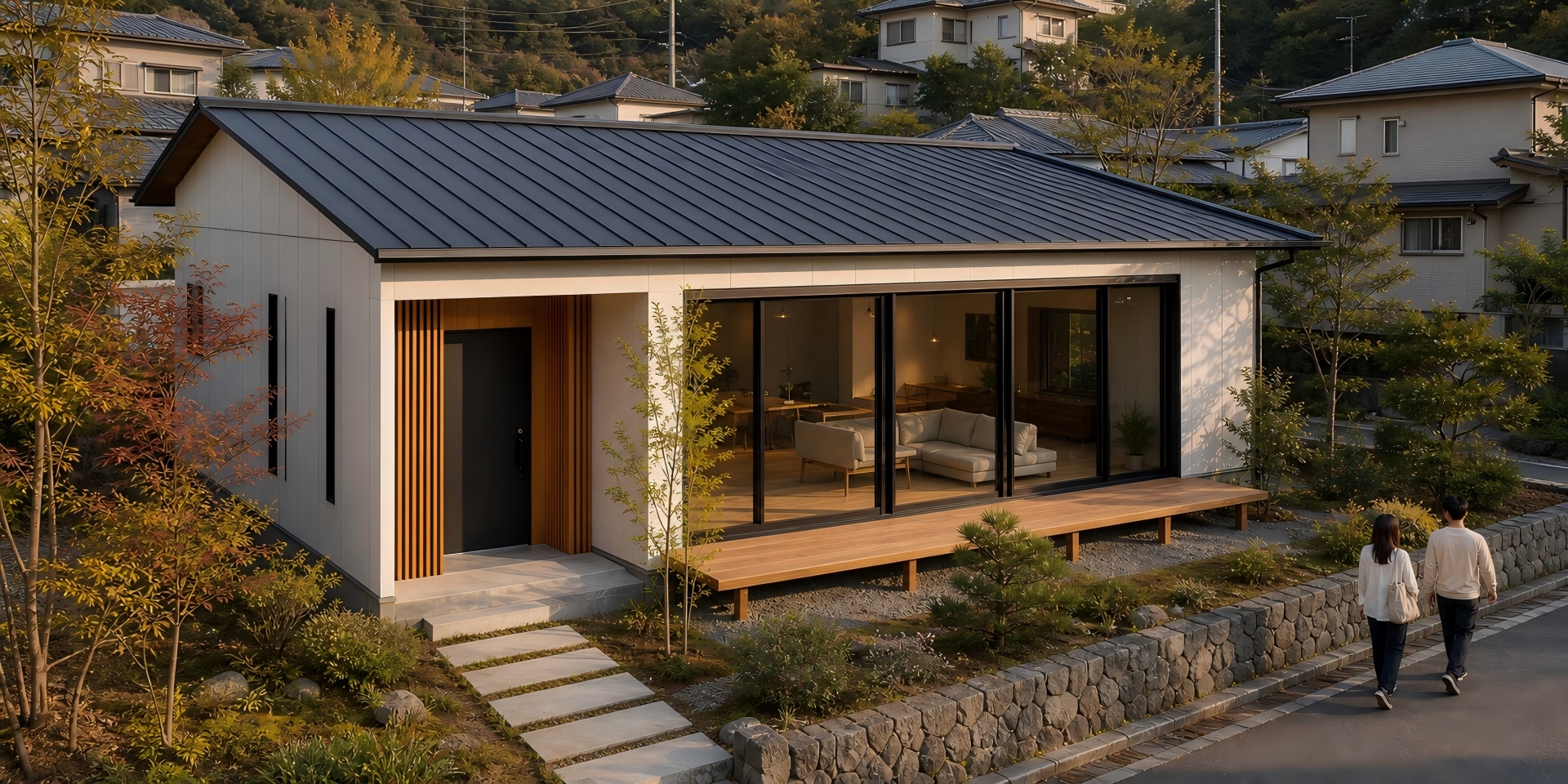
What Is a Steel House?
A steel house uses steel columns, beams, studs or trusses as its primary load-bearing structure. The exterior can still feature fiber-cement panels, timber cladding, metal roofing or other finishes, so the building does not need to look industrial.
Light-Gauge Steel Frame
Light-gauge steel framing uses cold-formed galvanized steel sections. It is commonly used for single-storey and two-storey homes, staff housing, rental units and modular accommodation. Its relatively low weight and standardized components make it suitable for factory production and repeat projects.
Heavy Steel Frame
Heavy steel framing uses larger columns and beams. It is more suitable for multi-storey buildings, wide spans, large glazed openings and open-plan interiors. It offers greater design flexibility but usually requires heavier foundations, lifting equipment and more complex installation.
The right system depends on the building size, structural loads, soil conditions and architectural requirements. It should be selected with a qualified structural engineer rather than by price alone.
Are Steel Houses in Japan Earthquake-Resistant?
A properly engineered steel house can perform well during earthquakes because steel has high strength and ductility. Yet the material alone does not guarantee seismic safety.
The complete design must consider:
-
Structural layout and bracing
-
Beam-to-column connections
-
Anchor bolts and foundations
-
Building weight distribution
-
Roof and wall connections
-
Local soil and seismic conditions
-
Manufacturing and installation quality
Japan's housing performance framework includes structural stability criteria for earthquake, wind and snow resistance. Project teams can review the relevant information from Japan's Ministry of Land, Infrastructure, Transport and Tourism.
For an imported prefab house, structural calculations must be adapted to the actual Japanese site. Engineering prepared for another country should not be treated as automatic proof of compliance.
Main Benefits of Steel-Frame Homes
Consistent Factory Quality
Steel components can be cut, drilled and assembled according to detailed production drawings. Factory-controlled manufacturing improves dimensional consistency and helps maintain the same specification across multiple units.
Faster On-Site Assembly
The frame, wall panels and roof components can be produced while foundations are being prepared. This parallel workflow may shorten the on-site construction period and reduce disruption in compact neighborhoods. The total schedule still depends on approval, logistics, utilities and inspections.
Flexible Design
Steel frames can support large windows, open living spaces and contemporary facades. They are suitable for compact homes, villas, rental housing and resort accommodation.
Termite Resistance
Steel framing is not a food source for termites. Other timber finishes, cabinetry and interior materials may still require protection, so termite management should remain part of the building plan.
Insulation and Condensation Control
Steel conducts heat more readily than timber. Without suitable detailing, steel studs and beams can create thermal bridges that reduce insulation performance and increase condensation risk.
A well-designed envelope should include continuous insulation, thermal breaks, airtight layers, suitable windows and controlled ventilation. Roof drainage, flashing and vapor-control layers must also be coordinated with the local climate.
Japan strengthened building energy-efficiency requirements in April 2025. New projects should confirm the applicable procedures through the official MLIT energy-efficiency portal.
When comparing suppliers, request the complete wall, roof and floor assembly. Insulation thickness alone is not enough. Buyers should review the insulation type, thermal conductivity, calculated performance, vapor-control strategy and window specification.
Fire, Corrosion and Acoustic Performance
Steel is non-combustible, but it can lose strength at high temperatures. Fire performance therefore depends on the complete tested assembly. Fire-rated boards, protected structural members, cavity barriers and approved doors may be required.
Steel must also be protected from moisture and salt. Galvanizing, protective coatings, sealed cut edges and well-designed drainage can reduce corrosion. Coastal projects require additional attention and a clear maintenance plan.
Acoustic performance is determined by the wall and floor build-up, not by the frame alone. Mineral wool, multiple board layers, resilient channels and sealed openings can improve sound insulation for rental and hospitality projects.
Foundations and Site Conditions
A prefabricated steel house still requires a site-specific foundation. The design may be affected by soil-bearing capacity, groundwater, slope, drainage, wind, snow and seismic loads.
Before manufacturing starts, the project team should confirm the site survey, structural loads, foundation design and anchor-bolt layout. Incorrect anchor positions can delay installation and create expensive remedial work.
Steel, Timber or Reinforced Concrete?
Steel is well suited to prefabrication, repeatable production and large openings. Timber is lightweight and familiar to many residential contractors, while reinforced concrete offers high mass and strong acoustic potential but normally requires slower, heavier construction.
There is no universal best material. Developers should compare structural requirements, energy performance, construction time, maintenance and total lifecycle cost.
Can a Prefab Steel House Be Imported into Japan?
Yes, but an imported house must still meet Japanese structural, fire, energy and site requirements. Before ordering, confirm:
-
Local architectural and engineering review
-
Site-specific seismic, wind and snow calculations
-
Accepted steel grades and material certificates
-
Fire and thermal performance of each assembly
-
Module dimensions, transportation and site access
-
Local utility connections
-
Foundation and installation drawings
-
Technical support and replacement parts
Japan provides guidance on imported structural steel and conformity documentation. Acceptance should be confirmed with the local design team and reviewing authority before production. See the Cabinet Office guidance on imported structural steel.

How to Choose a Steel House Manufacturer
A reliable manufacturer should provide more than a floor plan and quotation. Ask for structural drawings, material specifications, coating details, wall and roof build-ups, connection drawings, foundation information, quality-control records, packing plans, installation manuals and warranty terms.
For larger projects, a factory inspection or sample unit can help verify materials and workmanship before mass production. Responsibilities for engineering revisions, local approvals, shipping and installation should also be stated clearly in the contract.
Steel House Solutions from AOTIAN
AOTIAN supplies prefabricated and modular building solutions for international residential, accommodation and commercial projects. The scope can include layout customization, structural production, insulation, exterior finishes, windows, utility preparation, packing plans and installation documents.
For projects in Japan, final specifications should be coordinated with the buyer's local architect, structural engineer and approval authority before manufacturing.

Conclusion
Steel houses can provide accurate manufacturing, flexible design and efficient site assembly for projects in Japan. Their long-term value, however, depends on coordinated seismic engineering, foundations, insulation, moisture control, fire protection and corrosion prevention.
The best purchasing decision is not simply to choose a steel frame. It is to select a complete, documented building system that can be reviewed and adapted for the actual project site.
FAQs
1.Are steel houses safe during earthquakes?
They can achieve strong seismic performance when the frame, bracing, connections and foundations are engineered for the site. Steel alone does not guarantee earthquake resistance.
2.Are steel houses hot in summer or cold in winter?
Not necessarily. Continuous insulation, thermal breaks, airtight construction, suitable windows and ventilation can control heat transfer and condensation.
3.Is a light-gauge steel house suitable for Japan?
It can suit low-rise residential and modular projects when the complete system meets site-specific structural, fire, energy and approval requirements.
4.Is a prefab steel house cheaper?
Standardization may reduce manufacturing and on-site labor, but the total budget must include engineering, foundations, transport, lifting, approvals, utilities and installation.
Discuss Your Steel House Project
For a more relevant proposal, provide the project location, intended use, quantity, preliminary layout and local design conditions.
WhatsApp: +86 139 2885 5938
Email: info@aotianhouse.com
Website: www.aotianhouse.com