

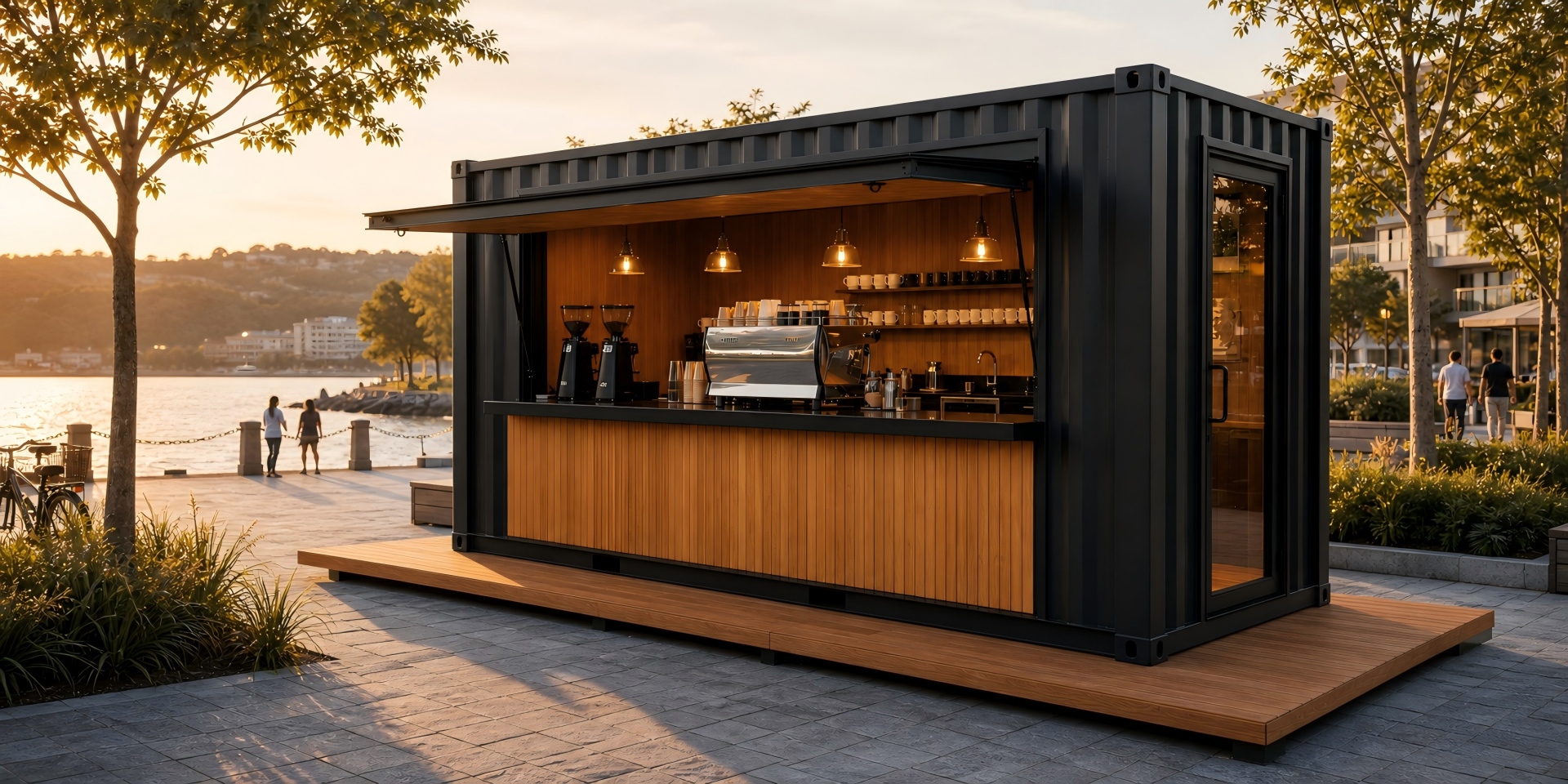
A container cafe shop transforms a steel container or purpose-built modular frame into a functional coffee business with a preparation area, service counter, storage, utilities, equipment connections, and optional customer seating.
As a Guangzhou-based modular building supplier, Aotian House provides custom container cafe solutions for coffee brands, entrepreneurs, commercial developers, resort operators, and food-service projects.

Why Traditional Coffee Shop Development Can Limit Business Growth
Opening a conventional coffee shop usually requires a long-term lease, interior construction, utility installation, permits, and extensive coordination between different contractors.
The process creates several commercial challenges:
- High initial construction and fit-out costs
- Long preparation periods before opening
- Limited flexibility when customer traffic changes
- Expensive renovation for new locations
- Difficulty operating on temporary or small sites
- Multiple suppliers for structure, utilities, and decoration
- Business disruption during expansion or relocation
If the location performs poorly, moving a traditional café is difficult. For new brands and seasonal projects, this can increase financial exposure before the business model has been properly tested.
A modular container cafe provides a more flexible route to market.
Aotian House Container Cafe Shop: A Business-Ready Modular Solution
Aotian House designs and manufactures container cafe shops based on the customer’s operating model, menu, equipment, branding, location, and delivery requirements.
The structure can be supplied as a converted shipping container or a purpose-built modular unit. Depending on project requirements, it can include service windows, counters, insulation, flooring, lighting, plumbing, electrical systems, air conditioning preparation, kitchen equipment connections, and exterior branding surfaces.
The concept belongs to the wider field of shipping container architecture, which adapts standardized steel structures for commercial, residential, hospitality, and public applications.
Efficient Layout for Faster Customer Service
A successful café needs more than an attractive exterior. The internal layout must support a clear workflow from order collection to drink preparation, payment, pickup, cleaning, and storage.
A practical container coffee shop layout can include:
- Customer ordering window
- Pickup and service counter
- Espresso machine station
- Grinder and preparation area
- Refrigerator and ice machine space
- Handwashing and cleaning sink
- Water storage or utility connections
- Cup, packaging, and ingredient storage
- Electrical distribution system
- Air conditioning and ventilation preparation
- Staff entrance and operating aisle
Equipment dimensions should be confirmed before production. This allows water outlets, drainage, sockets, counters, and ventilation connections to be positioned around the actual operating process.
For business owners, a better workflow can support faster service, reduce unnecessary staff movement, and make more effective use of limited space.
Prefabricated Construction for Faster Business Launch
A container cafe is largely produced and fitted out in a controlled factory environment. Structural reinforcement, doors, windows, insulation, counters, utilities, and finishes can be completed before the unit reaches the business location.
While the café is being manufactured, the customer can prepare foundations, utility connections, access paths, outdoor seating, signage, and local permits.
This parallel process can reduce on-site work and help the business move from planning to operation more efficiently.
The final delivery schedule still depends on customization, equipment, quantity, transport, site conditions, and local approval requirements.
Flexible Appearance and Strong Brand Visibility
The exterior of a container café functions as part of the brand experience. Its compact form, visible steel structure, large service window, lighting, and signage can help the business stand out in a busy commercial environment.
Customization options may include:
- Exterior paint and branded colors
- Wood, metal, or composite cladding
- Folding service windows
- Glass doors and display windows
- Illuminated signs
- Menu-board locations
- Exterior counters
- Canopies and sunshades
- Rooftop or side-mounted branding
- Outdoor decks and seating areas
Projects such as Boxpark demonstrate how container-based commercial spaces can form distinctive retail and food-service destinations rather than looking like temporary site buildings.
Choosing the Right Container Cafe Size
The correct size depends on the menu, number of employees, customer flow, equipment, storage, and seating strategy.
20ft Container Coffee Shop
A 20ft container coffee shop is suitable for compact operations such as:
- Takeaway coffee
- Espresso and cold beverages
- Packaged pastries
- Event concessions
- Park or campus kiosks
- Small roadside coffee points
- Seasonal pop-up businesses
Its smaller footprint can simplify transport and placement, but equipment and storage need to be planned carefully.
40ft Container Cafe
A larger unit can provide more preparation space, storage, equipment capacity, and staff circulation. It may support:
- Expanded beverage menus
- Light food preparation
- Bakery display
- Indoor customer seating
- Multiple service windows
- Drive-thru operations
- Higher-volume locations
The larger structure requires more site space, foundation planning, transportation access, and utility capacity.
Combined or Multi-Module Cafe
Two or more modules can be connected to create separate kitchen, ordering, seating, storage, or restroom areas.
This approach is suitable for commercial plazas, resorts, container parks, food halls, and permanent hospitality developments. Modules can also be arranged around a shared courtyard or outdoor seating area.
Mobile, Pop-Up, and Permanent Container Cafes
Not every container café needs the same structural and utility strategy.
A mobile container coffee shop may be designed for relocation between events, developments, or seasonal locations. Transportation method, lifting points, equipment restraint, and flexible utility connections become important considerations.
A pop-up container cafe may serve festivals, exhibitions, construction developments, seasonal attractions, and temporary retail spaces. It needs quick installation, clear branding, and efficient storage.
A permanent container café may require fixed foundations, full utility connections, additional insulation, drainage, fire-safety systems, accessibility features, and compliance with local commercial building regulations.
Buyers should define the intended use before confirming the design.
What Affects Container Cafe Cost?
The final container cafe cost depends on more than the basic steel structure.
Important cost factors include:
- 20ft, 40ft, or custom dimensions
- New container, used container, or purpose-built frame
- Structural reinforcement
- Number and size of service windows
- Insulation requirements
- Interior wall, ceiling, and flooring finishes
- Plumbing and drainage systems
- Electrical capacity
- Ventilation and air conditioning
- Kitchen equipment and counters
- Exterior cladding and branding
- Outdoor decks, canopies, and seating
- Packaging and international transport
- Site preparation and installation
When comparing quotations, buyers should confirm exactly which systems and finishes are included. A lower structural price may not include utilities, counters, equipment connections, transport protection, or installation support.
The more useful comparison is total project value: production quality, operating efficiency, delivery reliability, maintenance, and the time needed to start serving customers.
Where Can a Container Cafe Shop Be Used?
Container cafés can support both independent businesses and larger property developments.
Typical locations include:
- Tourist attractions
- Resorts and campsites
- Parks and waterfronts
- Commercial plazas
- University campuses
- Office parks
- Industrial developments
- Sports venues
- Festivals and exhibitions
- Roadside service areas
- Temporary construction developments
- Container retail parks
A container-based location can also help a coffee brand test customer demand before committing to a conventional permanent store.
Project Scenario: Starting Small and Expanding in Phases
A commercial developer may begin with one 20ft café beside a sales center, park, resort, or public event area. The initial unit provides coffee service while also creating a visible gathering point for visitors.
If customer traffic grows, the operator can add a second module for food preparation, seating, storage, or another retail concept. Outdoor decks and landscaping can connect the modules into a larger commercial destination.
This phased approach allows the operator to expand based on actual demand instead of completing the entire investment before opening.
Why Work with a Container Cafe Manufacturer in China?
Working with a professional container cafe manufacturer in China can give international buyers access to modular production, steel fabrication, interior finishing, customization, and export coordination through one supplier.
Aotian House is based in Guangzhou, an important manufacturing and international trade center in South China. The company can support customers with:
- Product and layout consultation
- Customized container structures
- Service-window and counter planning
- Utility coordination
- Interior and exterior finishes
- Export packaging
- Transportation planning
- Installation drawings and guidance
- Multi-unit commercial solutions
Buyers must still confirm local food-service permits, building regulations, fire requirements, accessibility rules, and utility standards with the relevant authorities before installation.
Conclusion
A container cafe shop can provide a flexible and visually distinctive platform for starting or expanding a coffee business. Its commercial value comes from combining compact space, efficient workflow, factory production, customizable branding, and the potential for relocation or phased growth.
The right solution depends on the menu, equipment, customer volume, location, utilities, local regulations, and long-term business plan.
For coffee brands and commercial developers, choosing the right container café means designing around daily operations rather than simply placing equipment inside a steel box.
FAQ
1.What is a container cafe shop?
A container cafe shop is a compact commercial coffee space built from a modified shipping container or purpose-built modular steel structure. It can include service counters, preparation areas, storage, plumbing, electricity, lighting, and equipment connections.
2.Is a 20ft container large enough for a coffee shop?
A 20ft unit can support takeaway coffee and compact beverage operations when the equipment and workflow are carefully planned. Larger menus, seating, or food preparation may require a 40ft unit or multiple modules.
3.Can a container cafe be customized?
Yes. Aotian House can customize the size, layout, service windows, counters, interior finishes, utilities, exterior cladding, colors, canopies, and branding locations according to project requirements.
4.Can a container coffee shop be relocated?
It can be designed for relocation, but the transport method, lifting structure, equipment restraint, utility connections, local permits, and site access must be considered during the design stage.
5.Does a container cafe need local approval?
Yes. Requirements vary by location. Buyers should confirm planning permission, building codes, food-service regulations, fire safety, accessibility, drainage, and electrical requirements with local authorities.
Get a Custom Container Cafe Solution
If you are planning a coffee shop, pop-up café, tourist attraction, roadside business, commercial plaza, or mobile food-service project, Aotian House can provide a custom container cafe shop solution based on your equipment, site, budget, and operating model.
WhatsApp: +86 139 2885 5938
Email: info@aotianhouse.com
Website: www.aotianhouse.com